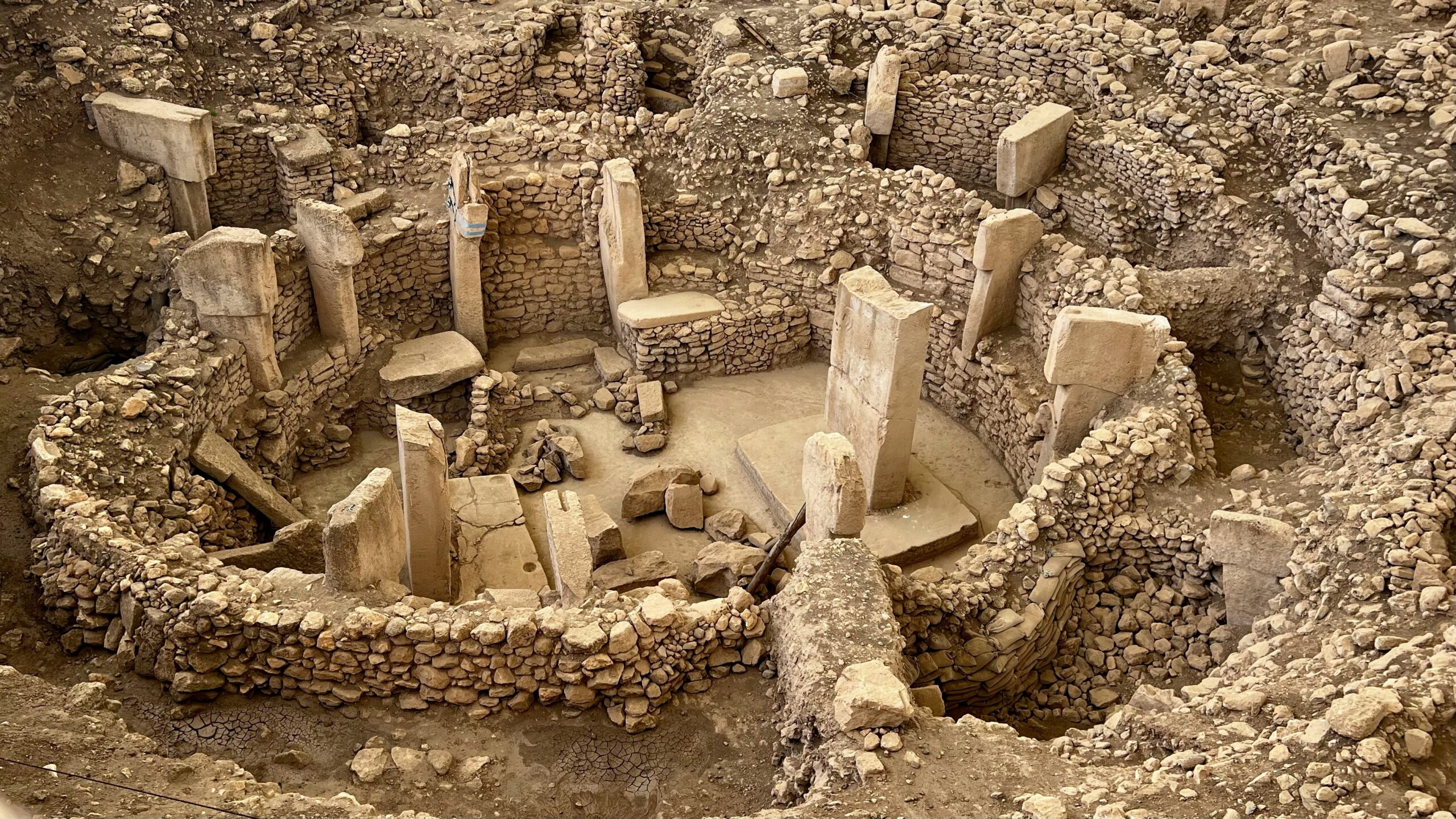
In the dry hills of southeastern Turkey lies a site that has quietly reshaped how we think about the origins of civilization. Long before pyramids, cities, or even farming, people gathered here and built something monumental — something that doesn’t quite fit into the story we’ve been telling about early human history.
Göbekli Tepe sits near the modern city of Şanlıurfa. At first glance, it doesn’t look like a typical ancient settlement. There are no houses, no streets, no obvious signs of everyday life.
A Site That Shouldn’t Exist
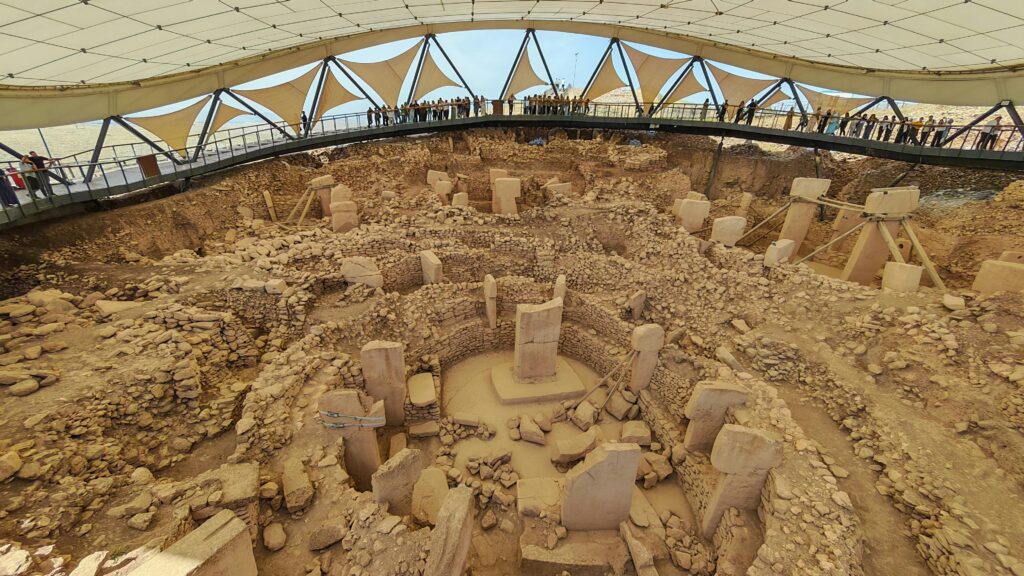
Instead, the site is made up of massive circular enclosures filled with towering stone pillars, some reaching up to five meters in height and weighing several tons.
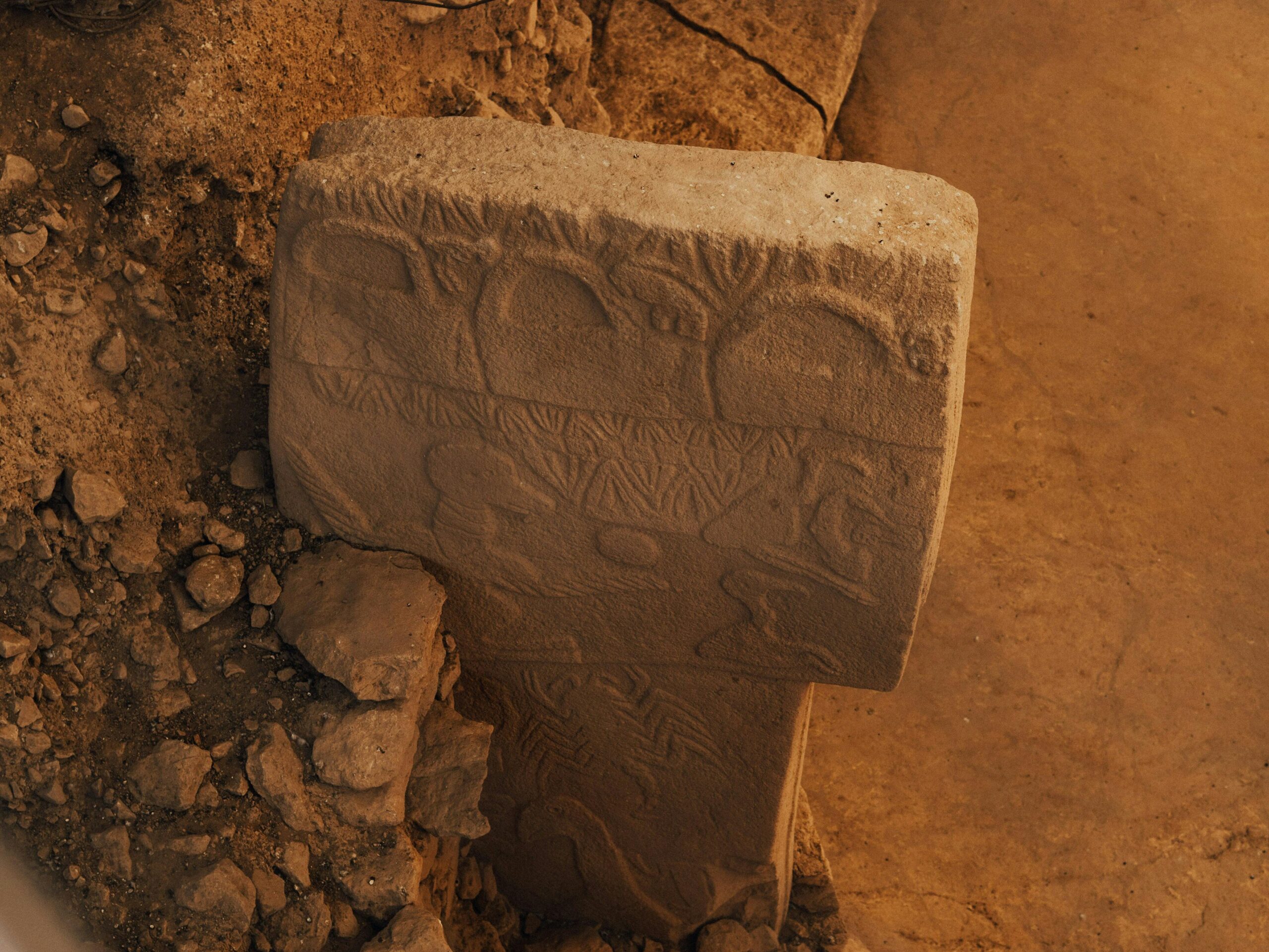
Many of these pillars are carved with animals — snakes, foxes, birds — arranged in ways that suggest meaning rather than decoration. The site dates back to around 9600 BCE, making it more than 11,000 years old. That places it far earlier than Stonehenge and long before the first cities in Mesopotamia.
Before Farming, Before Cities
What makes Göbekli Tepe difficult to explain is not just its age, but its timing. For a long time, the standard view of human development was relatively straightforward: people lived as hunter-gatherers, then developed agriculture, then began forming permanent settlements, and only after that built large, complex structures.
Göbekli Tepe seems to sit outside that sequence. If the current dating is correct, then groups of people were capable of organizing large construction projects before they had stable food production or permanent homes.
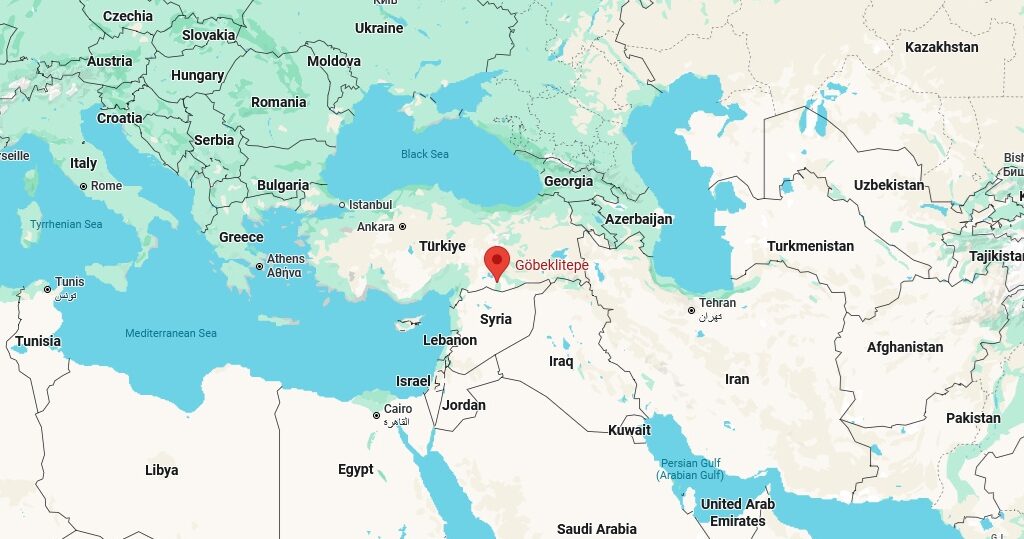
Where Göbekli Tepe is located
Built Without the Tools We Expect
The practical side of the site raises just as many questions. The pillars were cut from limestone, shaped, and moved into position. That kind of work requires planning and coordination, even with modern tools.
Yet there is no indication that the builders had access to metal tools, domesticated animals for transport, or anything resembling a structured workforce.
The scale of the construction implies large groups working together over time. This suggests that cooperation on a much larger scale was possible far earlier than we assumed.
Between Ritual and Necessity
Most researchers today lean toward the idea that Göbekli Tepe was a ceremonial site rather than a settlement. The absence of domestic structures supports that view, and the imagery carved into the pillars appears symbolic.
There is also a related idea that the site may have played a role in the transition to agriculture. Large gatherings of people would have required reliable food sources, which could have pushed communities toward cultivating crops.
In that sense, social or religious needs may have driven practical innovations, not the other way around.
More speculative interpretations exist, but they tend to move beyond what the evidence can support. Some suggest lost knowledge or unknown cultural influences, but there is no solid evidence supporting these claims.
What This Site Changes
What is more widely accepted is that Göbekli Tepe reveals a gap in our understanding. Early human societies may have been more complex, more cooperative, and more capable than older models allowed.
The site doesn’t require unknown technologies or lost civilizations to be remarkable — it is already enough to challenge existing assumptions.
Why Was It Buried?
Another detail that continues to puzzle researchers is the way the site was abandoned. Around 8000 BCE, the structures were deliberately buried under large amounts of soil and debris.
This was not a gradual natural process; it appears to have been intentional. The reasons behind this decision are still unclear.
What We’re Still Missing
Only a small portion of Göbekli Tepe has been excavated so far, leaving open the possibility that future discoveries could change the picture again.
Göbekli Tepe does not provide clear answers. What it does suggest is that the story of early human history is incomplete — and that we may still be missing entire chapters.
Common Questions About Göbekli Tepe
What is Göbekli Tepe?
Göbekli Tepe is an ancient archaeological site in modern-day Turkey, dating back over 11,000 years. It consists of large stone pillars arranged in circular formations.
Why is Göbekli Tepe important?
It challenges the traditional idea that complex structures were built only after the development of agriculture, suggesting that organized construction may have come earlier.
Who built Göbekli Tepe?
It is believed to have been built by hunter-gatherer societies, though the exact social structure behind its construction remains unclear.