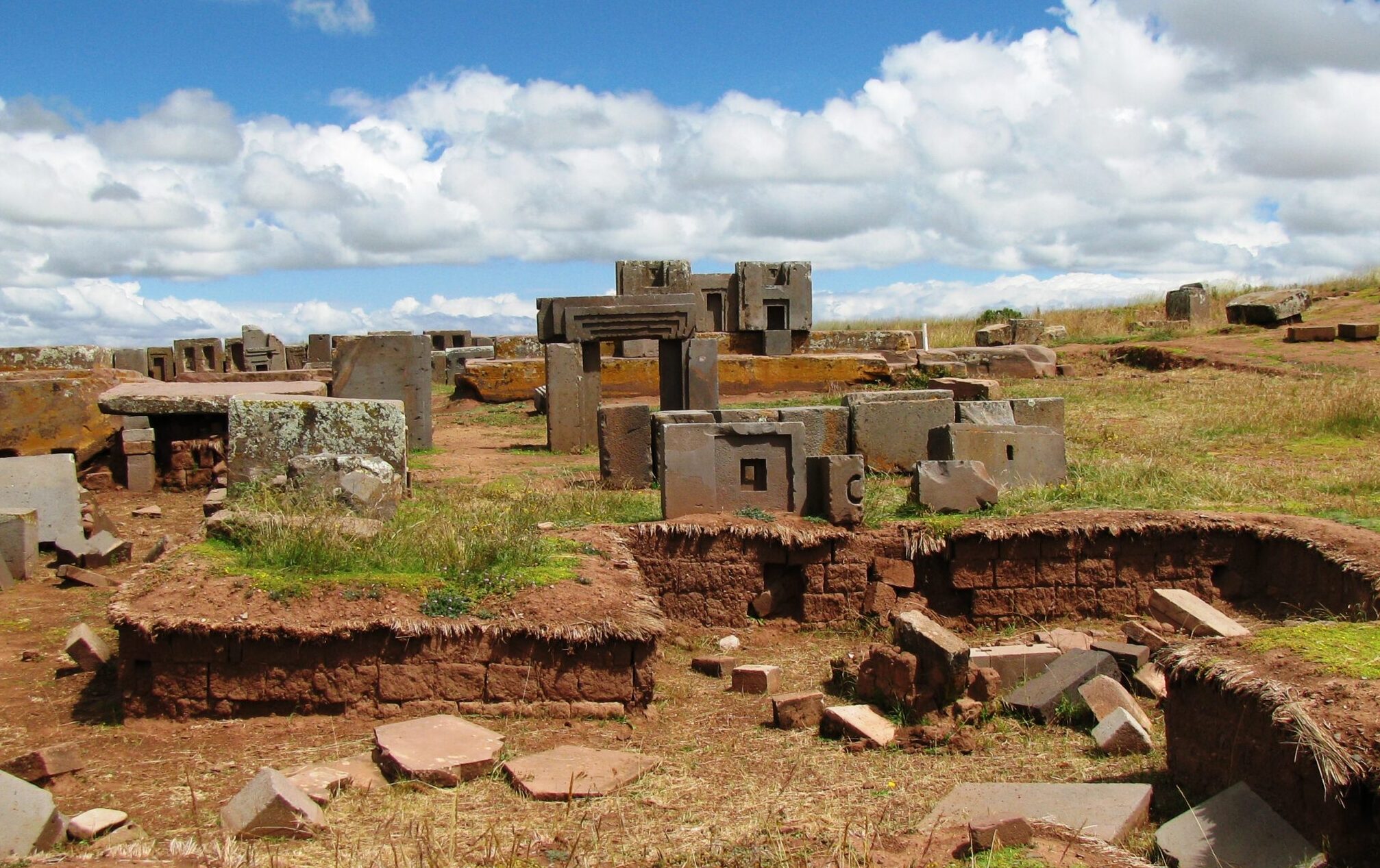
Among the world’s ancient archaeological sites, few have generated as much fascination—and as much misunderstanding—as Puma Punku.
Located on Bolivia’s high-altitude Altiplano, the site is famous for its enormous stone blocks, remarkably straight cuts, and distinctive H-shaped architectural elements. At first glance, some of the masonry appears surprisingly precise, leading many visitors to wonder how such work could have been accomplished more than a thousand years ago.
Over the past few decades, Puma Punku has become a frequent subject of documentaries, television programs, and internet discussions. Some have suggested that its construction required lost technologies or even non-human builders. These ideas have attracted widespread attention, but they often overshadow the site’s genuine archaeological significance.
In reality, Puma Punku is one part of the monumental ceremonial center of Tiwanaku, one of the most influential civilizations in pre-Columbian South America. Archaeological research has revealed sophisticated engineering, careful planning, and highly skilled stoneworking, even if many details of the construction process remain uncertain.
The true mystery of Puma Punku is not whether it was built by impossible means, but how the Tiwanaku people organized the labor, transported massive stones across difficult terrain, and achieved such impressive craftsmanship using the tools available to them.
Today, the site continues to challenge archaeologists—not because it defies science, but because it demonstrates a remarkable level of engineering from a civilization that left no written records describing its methods.
Location
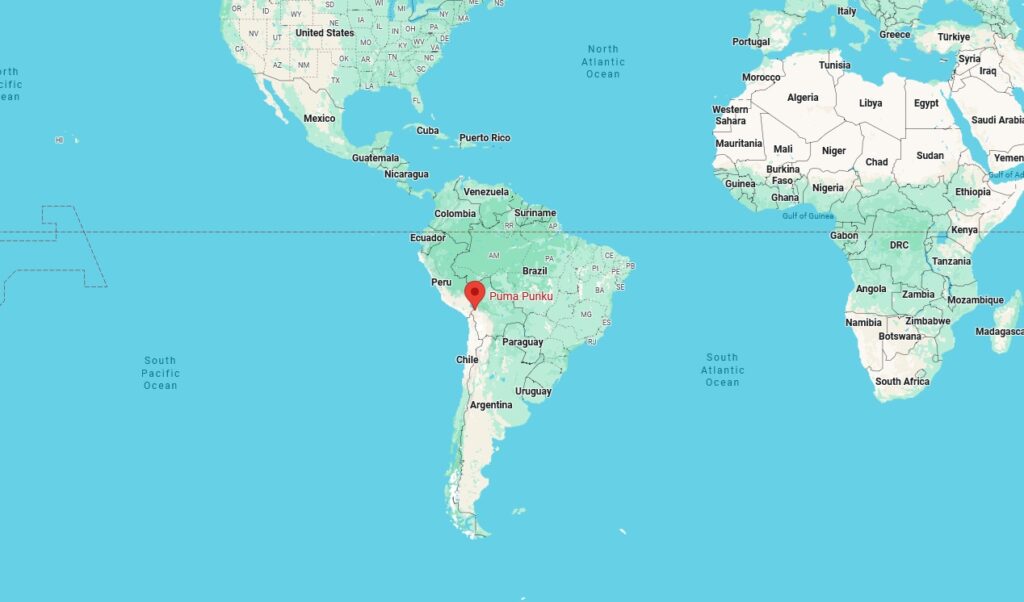
Puma Punku is located in western Bolivia, approximately 70 kilometers (43 miles) west of La Paz, near the southern shore of Lake Titicaca. Sitting at an elevation of nearly 3,850 meters (12,630 feet) above sea level, the site occupies one of the highest major archaeological landscapes in the world.
Rather than standing alone, Puma Punku forms part of the much larger archaeological complex of Tiwanaku, which served as the political, religious, and ceremonial center of the Tiwanaku civilization for several centuries.
Today, both sites are protected together as the Tiwanaku: Spiritual and Political Centre of the Tiwanaku Culture, a UNESCO World Heritage Site.
The Rise of the Tiwanaku Civilization
Long before the rise of the Inca Empire, the high plains surrounding Lake Titicaca were home to one of South America’s most influential civilizations.
Known today as the Tiwanaku civilization, this society emerged around the shores of Lake Titicaca during the first millennium AD and gradually developed into a powerful regional culture. Between approximately AD 500 and 1000, Tiwanaku became the political and religious center of a network that extended across much of present-day western Bolivia, southern Peru, northern Chile, and northwestern Argentina.
Unlike later empires that relied heavily on military conquest, many archaeologists believe Tiwanaku expanded primarily through trade, religious influence, and agricultural innovation. Communities across the Andes adopted aspects of Tiwanaku art, architecture, and ceremonial practices, creating a shared cultural sphere that stretched across thousands of kilometers.
At the heart of this civilization stood an impressive ceremonial center built from carefully shaped stone monuments, plazas, temples, and raised platforms. Puma Punku formed one of its most ambitious architectural projects.
What Was Puma Punku?
The name Puma Punku means “Gate of the Puma” in the Aymara language, although the original name used by the Tiwanaku people has been lost to history.
Rather than functioning as an isolated monument, Puma Punku appears to have been a monumental ceremonial platform connected to the larger urban and religious landscape of Tiwanaku.
Archaeologists believe the structure originally consisted of massive stone terraces, stairways, courtyards, and finely carved architectural elements that supported walls and gateways. Although much of the complex collapsed long before modern excavations began, the surviving blocks provide valuable evidence of the builders’ extraordinary stoneworking abilities.
Some sandstone blocks weigh more than 100 metric tons, while many of the precisely carved architectural components were fashioned from dense volcanic andesite. The combination of enormous construction stones and intricate decorative masonry has made Puma Punku one of the most studied examples of ancient Andean engineering.
A Monument Left in Ruins
When Spanish explorers reached the region in the sixteenth century, Puma Punku was already in ruins. Many of its stones had shifted from their original positions, while others were reused in nearby colonial buildings or local construction projects. Earthquakes, weathering, and centuries of human activity further altered the appearance of the site.
As a result, archaeologists today face an enormous challenge. Unlike monuments that remain largely intact, Puma Punku must be reconstructed from scattered architectural fragments. Every excavation, measurement, and newly identified foundation helps researchers better understand how the complex originally looked and how it functioned within the ceremonial center of Tiwanaku.
Even in its ruined state, however, Puma Punku remains one of the finest surviving examples of precision stone architecture in the ancient Americas.
The Famous H-Shaped Blocks
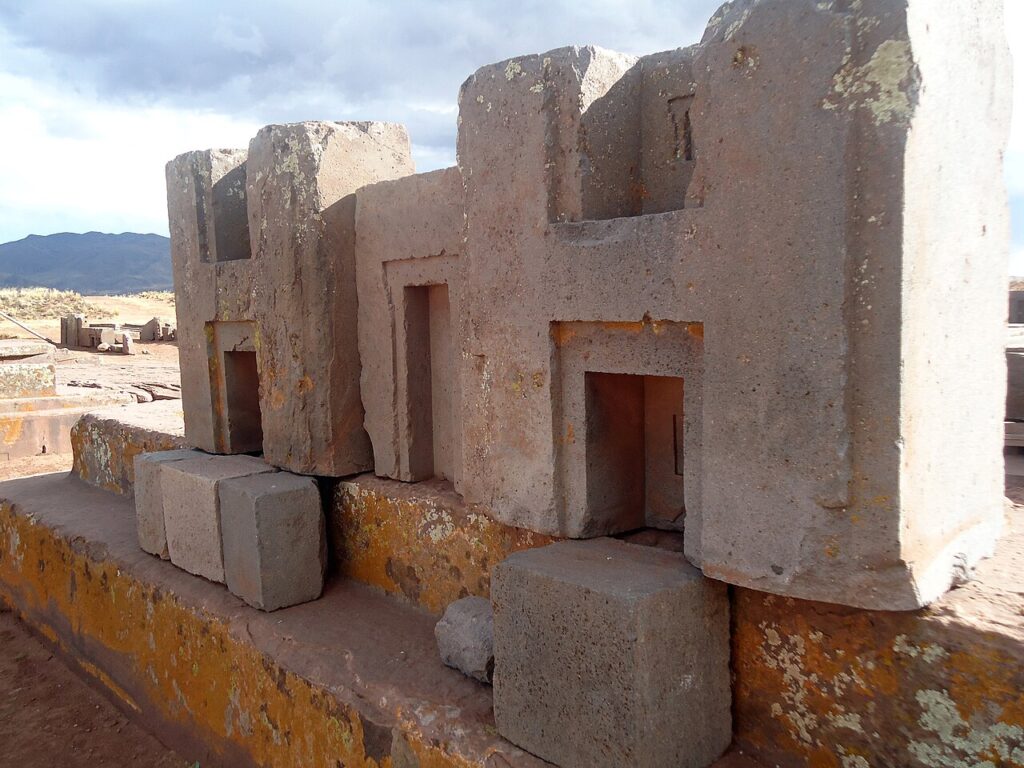
The most recognizable feature of Puma Punku is a series of carefully carved stone blocks commonly known as the H-shaped blocks.
Unlike the massive sandstone foundation stones used throughout the complex, these smaller architectural elements were carved from dense gray andesite, a volcanic rock considerably harder to shape than sandstone. Their clean angles, recessed surfaces, and precisely cut notches have made them one of the defining images of the site.
At first glance, many of the blocks appear almost machine-made. Straight lines, right angles, and symmetrical proportions have often been cited as evidence of unusually advanced construction techniques. However, close archaeological examination shows that the stones were not perfectly identical. Small differences in dimensions, surface finishing, and decorative details indicate that they were individually crafted rather than mass-produced.
Researchers believe these blocks formed part of an architectural system that allowed walls, gateways, and other structural components to fit together with remarkable consistency. Their repeated design suggests that Tiwanaku builders followed standardized construction principles while still shaping each stone by hand.
Rather than representing mysterious technology, the H-shaped blocks demonstrate careful planning, skilled craftsmanship, and an advanced understanding of stone architecture.
Quarrying and Transporting the Stones
One of the greatest engineering challenges at Puma Punku was not carving the stones, but moving them.
The site contains two main types of stone. Large foundation blocks were carved from red sandstone, while many of the precisely shaped architectural elements—including the famous H-blocks—were made from andesite, a much harder volcanic rock.
Geological studies have identified the likely sources of these materials. The sandstone was quarried relatively close to the site, while much of the andesite appears to have originated from quarries near the shores of Lake Titicaca, several kilometers away.
Transporting stones weighing tens of tons across the Altiplano would have required careful planning and the coordinated labor of large work crews. Because the Tiwanaku civilization left no written records describing its construction methods, archaeologists cannot say exactly how the stones were moved. The most widely accepted hypotheses include combinations of:
- wooden rollers where suitable timber was available,
- ropes made from plant fibers,
- sledges pulled across prepared surfaces,
- earthen ramps,
- transportation across Lake Titicaca on large reed boats for part of the journey.
None of these methods has been conclusively demonstrated for every stone used at Puma Punku, but together they offer practical explanations consistent with known engineering techniques from other ancient civilizations.
The absence of iron tools, wheeled transport for heavy construction, or draft animals capable of pulling enormous loads makes the achievement even more impressive.
How Precise Is Puma Punku Really?
One reason Puma Punku attracts so much attention is the belief that its stonework is “perfect.” In reality, the precision is remarkable—but it is also often exaggerated.
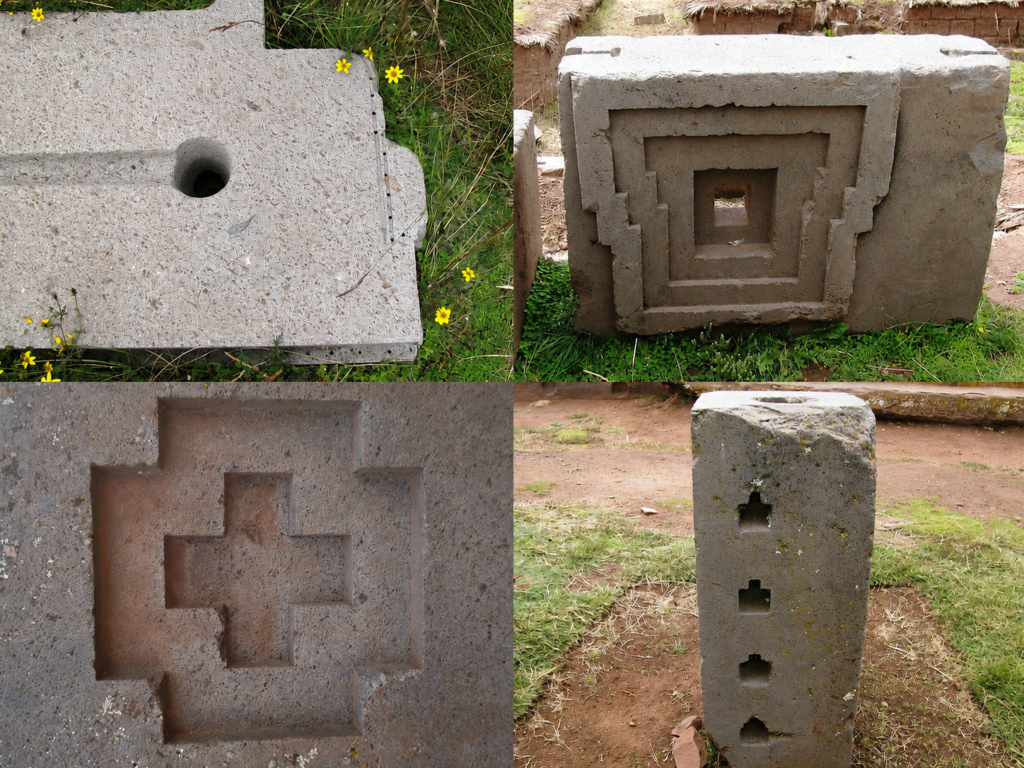
Modern laser scanning and detailed archaeological measurements show that many surfaces are exceptionally flat and that numerous angles were carefully aligned. Some grooves and drilled holes display a level of consistency that reflects highly skilled craftsmanship.
However, the stones are not mathematically perfect. Small variations in measurements, subtle asymmetries, and signs of manual finishing are visible throughout the site. Weathering over many centuries has also altered edges and surfaces, making it difficult to reconstruct the original appearance of every block with complete certainty.
These observations are important because they demonstrate that Puma Punku is neither a crude prehistoric construction nor an example of impossible engineering.
Instead, it represents the work of expert stonemasons who developed sophisticated techniques through experience, planning, and careful craftsmanship. Its precision deserves admiration without requiring explanations that fall outside the available archaeological evidence.
Competing Theories
Like many famous archaeological sites, Puma Punku has inspired a wide range of interpretations. Some are firmly supported by archaeological evidence, while others remain speculative or have been largely rejected by researchers.
Established Archaeological Interpretation
Most archaeologists agree that Puma Punku was constructed by the Tiwanaku civilization between approximately AD 500 and 1000 as part of a major ceremonial and political center.
The site’s architecture reflects careful planning, specialized stoneworking, and a highly organized workforce capable of transporting and assembling enormous blocks over difficult terrain.
Although many details of the construction process remain uncertain, there is no evidence that the builders possessed technologies beyond those available to ancient Andean societies.
Unanswered Questions
Several aspects of Puma Punku continue to be actively studied. Researchers are still investigating:
- the exact sequence of construction,
- how unfinished sections fit into the overall design,
- the precise methods used to transport the heaviest stones,
- why the complex was abandoned before reaching its final form.
These questions remain open because the site survives only in a partially collapsed state, not because its builders are unknown.
Popular Fringe Theories
Since the late twentieth century, Puma Punku has frequently appeared in books, television programs, and online videos promoting extraordinary explanations.
Among the most common claims are that the site was built:
- with lost advanced technology,
- using machines capable of cutting stone with perfect precision,
- by an unknown prehistoric super-civilization,
- or with assistance from extraterrestrial visitors.
Despite their popularity in popular culture, none of these theories is supported by archaeological evidence.
Most rely on exaggerated descriptions of the stonework or on the mistaken assumption that ancient civilizations could not have achieved such craftsmanship using traditional methods.
The true achievement of Puma Punku lies not in impossible technology but in the ingenuity of the Tiwanaku people, whose engineering skills continue to impress archaeologists today.
Modern Research
Although Puma Punku has been studied for more than a century, new technologies continue to reshape archaeologists’ understanding of the site.
Today, researchers combine traditional excavation with advanced methods such as three-dimensional laser scanning, drone photography, photogrammetry, and digital modeling. These tools allow archaeologists to document every surviving stone in remarkable detail and test how individual blocks may have originally fit together.
Digital reconstruction has become particularly valuable because much of Puma Punku no longer stands in its original position. By comparing measurements, carved joints, and architectural features, researchers can create virtual models that help visualize how the ceremonial complex may have appeared before its collapse.
Geological studies have also improved our understanding of the site’s construction. By analyzing the mineral composition of individual stones, scientists have identified the likely locations of several ancient quarries, providing new insight into how building materials were selected and transported.
Despite these advances, important questions remain unanswered. Archaeologists continue to investigate the precise sequence of construction, the organization of labor, and the ceremonial role that Puma Punku played within the larger Tiwanaku complex.
Rather than diminishing the site’s mystery, modern research has revealed just how sophisticated the Tiwanaku civilization truly was.
Why Puma Punku Still Fascinates Us
Puma Punku occupies a unique place in archaeology because it challenges modern assumptions about ancient engineering.
Its carefully shaped stones, ambitious architecture, and unfinished appearance invite questions that have inspired generations of researchers. Unlike many famous monuments whose builders left written records, the Tiwanaku civilization preserved its achievements primarily in stone.
This absence of written documentation has created space for speculation, but it has also encouraged increasingly sophisticated scientific investigation.
Each new survey, excavation, and digital reconstruction brings archaeologists closer to understanding not only how Puma Punku was built, but also the remarkable society that conceived such an ambitious project.
The monument reminds us that ancient civilizations often possessed engineering skills far beyond what earlier generations of historians imagined.
Common Questions About the Puma Punku
Puma Punku is located near the ancient city of Tiwanaku in western Bolivia, approximately 70 kilometers (43 miles) west of La Paz and close to Lake Titicaca.
Who built Puma Punku?
Archaeological evidence attributes the site to the Tiwanaku civilization, which flourished in the central Andes between approximately AD 500 and 1000.
Why is Puma Punku famous?
The site is best known for its massive stone blocks, precisely carved H-shaped architectural elements, and sophisticated masonry, which continue to impress archaeologists and visitors alike.
How heavy are the stones?
Some of the largest sandstone blocks weigh more than 100 metric tons, while many of the finely carved architectural elements are made from dense volcanic andesite.
Did ancient people use advanced machines to build Puma Punku?
There is no archaeological evidence that advanced machines or unknown technologies were used. Researchers believe the monument was constructed using skilled craftsmanship, careful planning, and construction techniques available to the Tiwanaku civilization.
Why do people associate Puma Punku with ancient aliens?
The site’s impressive stonework has often been exaggerated in books, television programs, and online media. These claims are not supported by archaeological evidence and generally overlook the capabilities of ancient Andean engineers.
Is Puma Punku a UNESCO World Heritage Site?
Yes. Puma Punku forms part of the Tiwanaku: Spiritual and Political Centre of the Tiwanaku Culture, which was inscribed as a UNESCO World Heritage Site in 2000.